Watch Our Tenant Eviction Guide

Our eviction solicitors walk you through the entire eviction processfrom serving notices to securing possession so you know exactly what to expect.

Take Back Control Today: fill in our quick contact form or call us on 03301224267 (Mon–Fri, 9am–6pm).

Fasttrack Your Eviction


Notice
Court process
Bailiffs
Possession

What is a Bailiff?

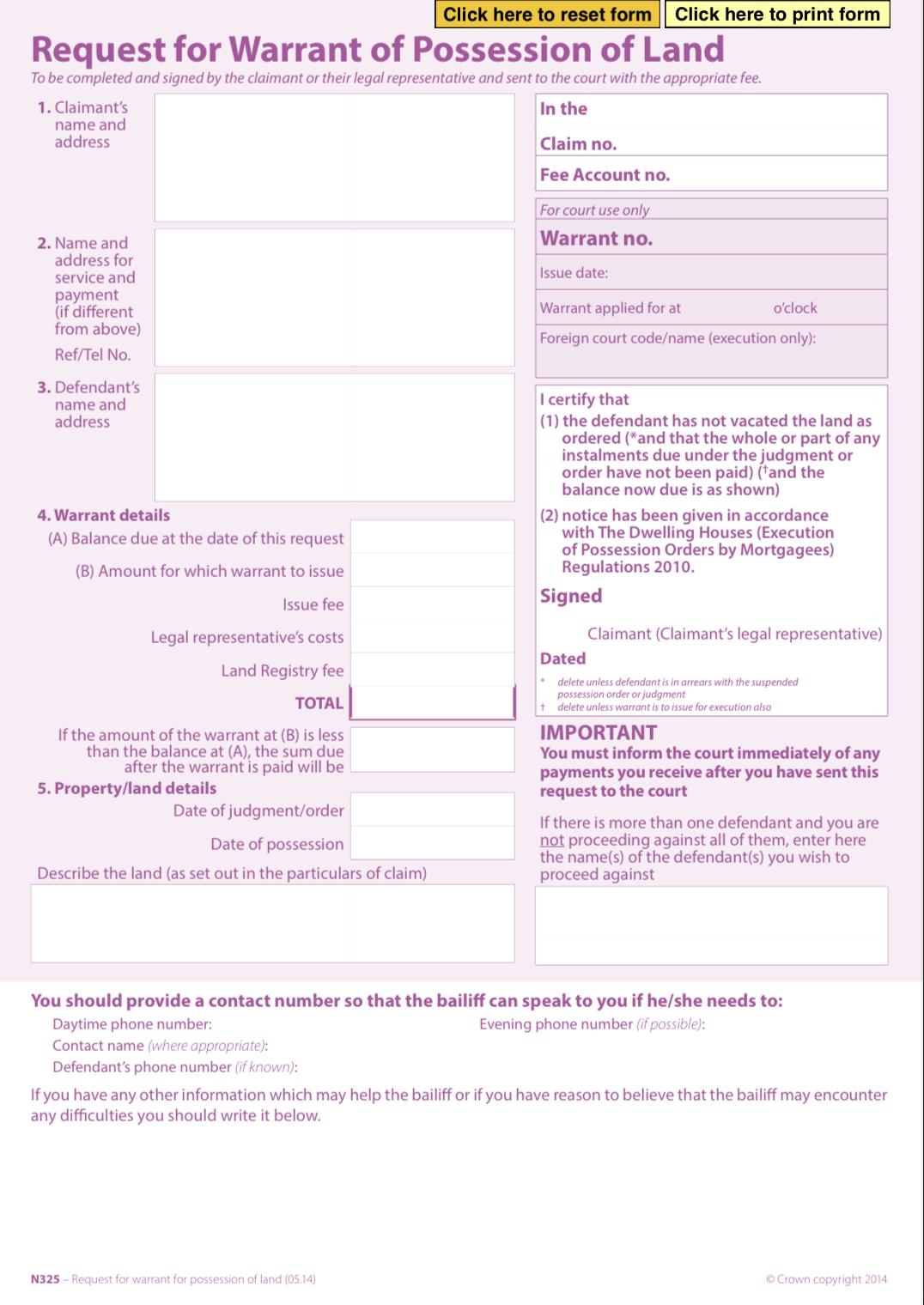
A County Court Bailiff is an authorised enforcement officer who carries out the final stage of the lawful eviction process in England and Wales. Once a possession order has been granted and the tenant still refuses to leave, we apply for a warrant of possession (Form N325). The court then instructs the bailiff to remove the tenant and return legal possession to the landlord. You never need to confront the tenant — we coordinate and attend the appointment on your behalf.

Bailiffs will give notice of the eviction date, attend the property, ensure compliance with the court order, and oversee a safe handover of the property back to you. Lead times vary by court, and delays are common in busy regions like London or Birmingham.

Where a faster outcome is needed, we may transfer enforcement up to High Court Enforcement Officers, subject to permission, which can significantly shorten waiting times.

We manage every step: application, scheduling, access, locksmith arrangements, and securing the property after eviction.

Bailiff enforcement is the only fully legal route to remove a tenant who will not leave.

call us FREE on: 03301224267

Page Content Navigation

Testimonials

4.8/5 Google Rating

Natisha Antionette

2025-02-04

google-favicon
Star Rating

First of all I would like to say how fantastic SLS solicitors are and if you are looking for a solicitor that will have good communication and are reliable i will say look no further!!

Gio Gauchey

2025-01-01

google-favicon
Star Rating

I have found SLS to be utterly professional and they have resolved my issue far sooner than it would have been had I continued trying to contact the agent and the Council myself.

Geoff Philips

2024-12-01

google-favicon
Star Rating

I would definitely recommend SLS Solicitors Ltd for any disrepair claims against a local authority landlord – they are an upfront no win no fee firm and when they take your case on they will give it everything they have.

Our Eviction Step-by-Step Guide

We explain the simple legal steps in 2025 you need to take for eviction from inception to conclusion, giving you peace of mind on your legal journey. Please note, the court may adjourn the hearing on the day to consider any potential defences or complex issues.

1

Serve the required notice

We guide you through the full eviction process, outlining every legal step from preparing and serving a valid Section 8 or Section 21 notice to starting court proceedings ensuring landlords regain possession of their property lawfully under current housing legislation in England and Wales.

2

Possession Order Claim

We handle the entire possession order process for landlords from issuing the correct court claim and preparing legal documents to representing you at hearings ensuring you lawfully secure possession of your rental property in full compliance with current housing law across England and Wales.

3

Instruct a Bailiff

If tenants ignore a court possession order, we take the next step by instructing County Court or High Court Enforcement Officers. Our team manages all paperwork and enforcement procedures to ensure landlords lawfully regain full possession of their property anywhere in England and Wales.

4

Change the Locks

After the bailiff enforces your possession order, we help landlords lawfully change the locks using certified locksmiths. This ensures your rental property is fully secured, compliant with housing regulations, and protected against unauthorised access anywhere in England and Wales following a legal eviction process.

Mandatory Grounds for Possession

Ground 1:Landlord occupation (2 months’ notice)
The landlord requires possession because they previously lived in the property as their main home, or now wish to move in as their main residence.

Ground 2: Mortgage repossession (2 months’ notice)
The property is subject to a mortgage and the lender (mortgagee) is entitled to exercise a power of sale.

Ground 3: Holiday let (2 weeks’ notice)
The tenancy is for a fixed term of no more than 8 months, and the property was previously used as a holiday let.

Ground 4: Student accommodation (2 weeks’ notice)
The tenancy is for a fixed term of no more than 12 months, and the property is student accommodation let out of term.

Ground 5: Minister of religion (2 months’ notice)
The property is required for use by a minister of religion, e.g. clergy housing.

Ground 6: Redevelopment (2 months’ notice)
The property requires substantial redevelopment or demolition that cannot reasonably be carried out with the tenant in occupation.

Ground 7: Death of tenant (2 months’ notice)
The tenant has died and the tenancy has passed to someone not entitled to succeed under the law.

Ground 8: Rent arrears (2 weeks’ notice)
The tenant is in serious rent arrears – typically at least 8 weeks’ arrears (weekly tenancy) or 2 months’ arrears (monthly tenancy) both at the date of the notice and the hearing.

Contact us today for more information about our Guaranteed Eviction Packages

call us FREE on: 03301224267

Discretionary Grounds for Possession

Ground 9 – Alternative accommodation (2 months’ notice)
Suitable alternative housing is available for the tenant when possession is granted.

Ground 10 – Rent arrears (2 weeks’ notice)
The tenant has rent arrears at the time of serving the notice and at the hearing.

Ground 11 – Persistent delay in rent (2 weeks’ notice)
The tenant has a history of paying rent late, even if not currently in arrears.

Ground 12 – Breach of tenancy (2 weeks’ notice)
The tenant has broken a term of the tenancy agreement, other than rent payment.

Ground 13 – Damage to property (2 weeks’ notice)
The property has deteriorated due to the tenant’s neglect or conduct.

Ground 14 – Nuisance / illegal use (immediate to 2 weeks’ notice)
The tenant causes nuisance, annoyance, or engages inillegal/immoral use of the property. The court can act quickly here as this is a serious ground.

Ground 15 – Damage to landlord’s furniture (2 weeks’ notice)
The tenant has allowed the landlord’s furnishings to deteriorate through ill-treatment.

Ground 16 – Former employee tenancy (2 months’ notice)
The tenant occupies the property under a service tenancy (e.g. as part of former employment).

 Ground 17 – False statement (2 weeks’ notice)
The tenancy was granted based on a false statement knowingly made by the tenant.

Fill in our contact form in seconds

Possession Order – Taking Your Tenant to Court

Possession Orders Made Simple – Court Action for Landlords

If a tenant ignores your notice, the next step is to apply to the court for possession. When a tenant refuses to leave after being served with a Section 8 or Section 21 notice, you must move quickly to protect your property and income. The next legal step is to issue possession proceedings in the County Court.

You don’t need to worry about the paperwork or procedure. Our experienced tenant eviction specialists take care of everything from start to finish. We will:

  • Draft and file all necessary court documents on your behalf.
  • Guide you through each stage of the possession process.
  • Use our proven expertise to secure a possession order quickly and correctly.

With our team handling your case, you’ll have the confidence of knowing your eviction is legally sound and progressing without unnecessary delay.

FASTTRACK YOUR EVICTION TODAY

Bailiff Enforcement – Removing Tenants Who Still Refuse to Leave

Bailiff Eviction – The Final Step to Regain Your Property

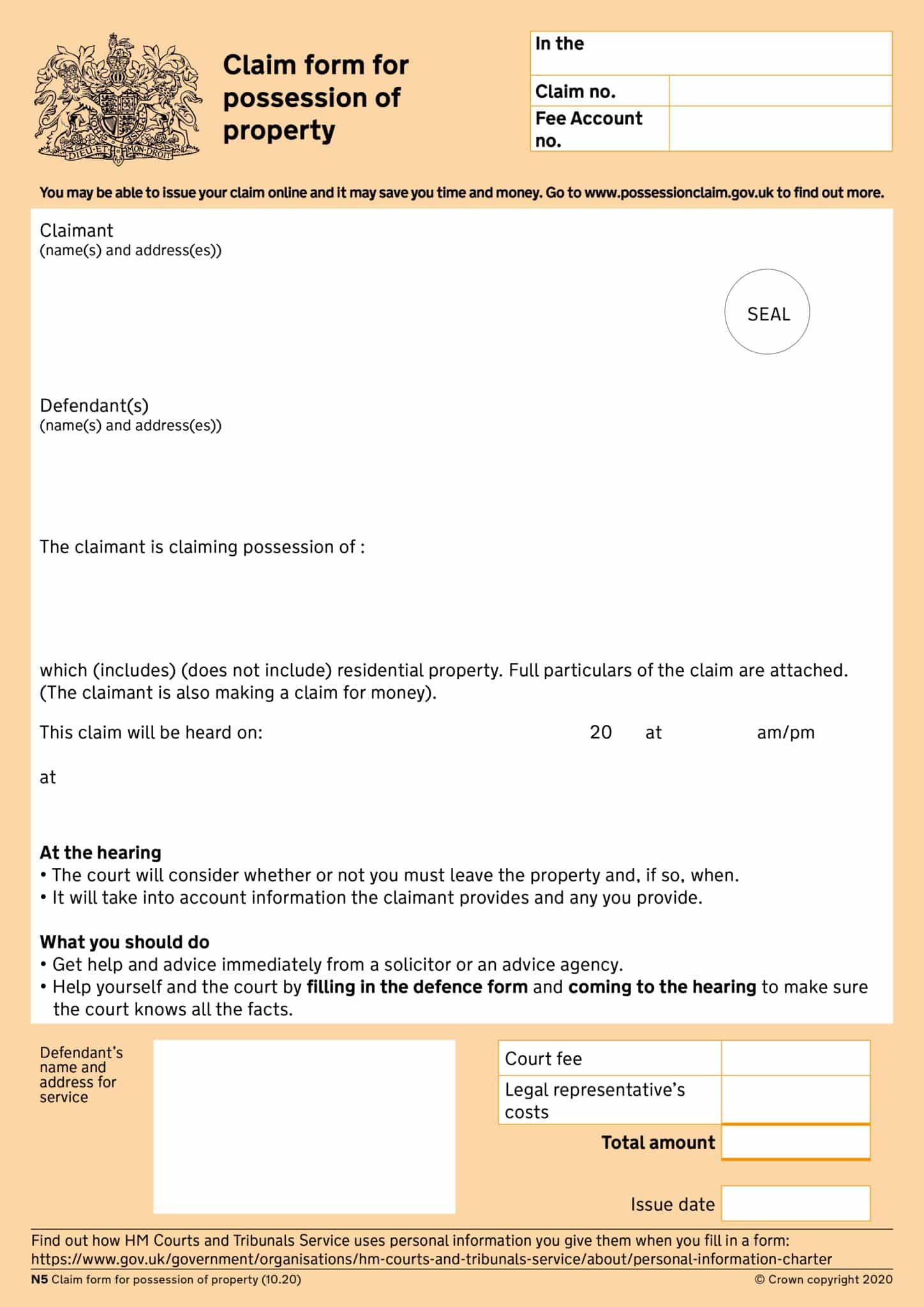
If tenants don’t leave after a court order, bailiff enforcement guarantees vacant possession. Sometimes, tenants ignore even a possession order. In that situation, the final stage is to apply for a warrant of possession. This allows County Court Bailiffs – or, where appropriate, High Court Enforcement Officers – to lawfully remove the tenant and return your property to you.

Our team manages the process from start to finish, including:

  • Applying for the warrant of possession without delay.
  • Instructing bailiffs or enforcement officers on your behalf.
  • Ensuring every step complies fully with the law, giving you a clean and enforceable eviction.

This is the last stage of the tenant eviction process, and it provides landlords with complete certainty that their property will be recovered. Acting quickly avoids further lost rent and ensures you can re-let your property sooner.

FASTTRACK YOUR EVICTION TODAY

Why you must lawfully evict tenants

However frustrating a tenancy dispute becomes, eviction must follow the legal process. Cutting corners (changing locks, blocking access, intimidation, removing belongings, or any form of forced eviction) risks criminal liability, loss of a possession claim, and paying the tenant’s legal costs. A compliant route protects your position and speeds up a clean handover of the property.

Serving a Section 8 notice

If your tenant has breached the tenancy (e.g., rent arrears or other grounds set out in Schedule 2 of the Housing Act 1988), you can serve a Section 8 notice. Use the prescribed “Notice seeking possession of a property let on an assured tenancy or an assured agricultural occupancy” form. Grounds and notice lengths vary—accuracy matters. We draft, serve, and evidence compliance so your claim is court-ready.

Steps to take when evicting tenants (overview)

  • Section 21 (no-fault) or Section 8 (breach):
    We review compliance (deposit, EPC, gas safety, EICR, licensing, How to Rent) and cure issues where possible before notice is served.
  • Issue possession proceedings: If the tenant does not vacate, we issue a Part 55 possession claim. A court fee applies (check current fee).
  • Hearing & order: We represent you at the hearing and seek possession, rent arrears, costs, and appropriate timescales for possession.
  • Enforcement: If the tenant still remains, we arrange County Court bailiffs or, where appropriate, transfer up to High Court Enforcement Officers for faster execution.

It’s essential to follow the rules precisely. A single defect can derail a case. Our eviction solicitors provide clear, step-by-step guidance and handle the paperwork and advocacy for you.

Ready to speak with a solicitor?

We assist landlords across England & Wales. Call 03301224267 or use the enquiry form for a swift assessment.

Your Eviction Lawyer:

Sheik Islam - Principal Lawyer & Founder

Sheik Islam (LLB Hons)

Principal Lawyer & Founder

20+ years’ legal experience

Fast contact

  • Phone: 03301224267
  • Form: Send brief details and we’ll respond promptly with next steps.
  • Response aim: Same business day for urgent possession matters.

The service area we cover in England & Wales.

  • Manchester (City Center): M2 — 53.47894, -2.24528
  • London (Central): WC2N / SW1A — 51.50740, -0.12780
  • Birmingham: B1 — 52.48624, -1.89040
  • Leeds: LS1 — 53.79970, -1.54920
  • Liverpool: L1 — 53.40840, -2.99160
  • Sheffield: S1 — 53.38110, -1.47010
  • Nottingham: NG1 — 52.95480, -1.15810
  • Bristol: BS1 — 51.45450, -2.58790
  • Newcastle upon Tyne: NE1 — 54.97830, -1.61780
  • Cardiff: CF10 — 51.48160, -3.17910
  • Swansea: SA1 — 51.62140, -3.94360

Need lawful possession fast? Speak to an eviction solicitor today. Call 03301224267 or send an enquiry—we’ll outline your best route (Section 8 or 21), timelines, and costs before we act.

FASTTRACK YOUR EVICTION TODAY

Section 21 – Most Searched FAQs for 2025

How long does bailiff enforcement take in England & Wales?

Typically 4–8 weeks after applying for the warrant, depending on local County Court backlog. High Court Enforcement can be faster where permission is granted.

Will I need to attend the eviction with the bailiff?

No. We coordinate access and handle everything on the day — landlords do not need to confront the tenant.

What happens if the tenant refuses to open the door?

The bailiff has authority to enter and we arrange a locksmith where appropriate. Possession is regained legally and safely.

Can I choose High Court Enforcement instead of a County Court Bailiff?

Yes — where urgency is justified. We apply to transfer up. HCEO is usually quicker but has higher enforcement costs.

Can bailiffs remove the tenant’s belongings?

Items are left secured in the property. The tenant must collect belongings within a reasonable time. We advise on your obligations.

When should I change the locks?

Immediately after enforcement. We arrange a locksmith and secure the property to prevent re-entry and protect your asset.

Start your eviction process

Name(Required)

0330 122 4267